game manuals
HomeBackWhen video games were still in the genesis of the medium, the capability of the software to communicate a story, explain game mechanics and create a unique visual style was minimal at best. Memory and storage capacities were at a premium, which meant that things we often take for granted - such as tutorials or dialogue trees - were usually not on the table. Early consoles and home computers such as the Atari 2600, NES, and Commodore 64 had to resort to other means to clue the player in on what was going on.
Some of that visual communication would come in the form of box art, and some if it would be relayed in marketing, but the heavy lifting was most often accomplished by pack-in manuals.
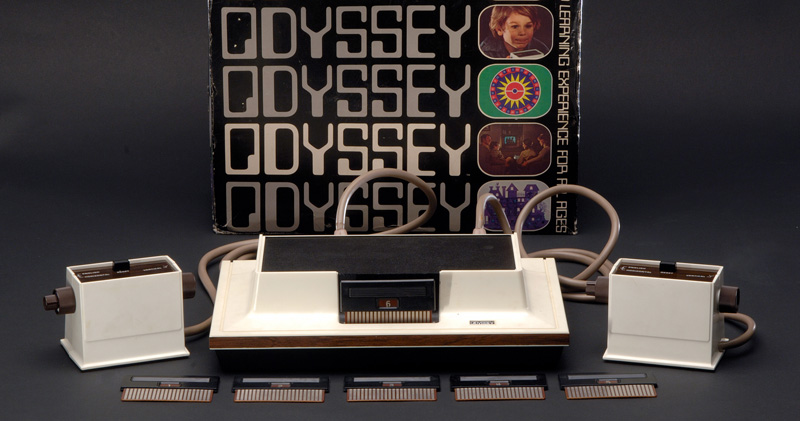
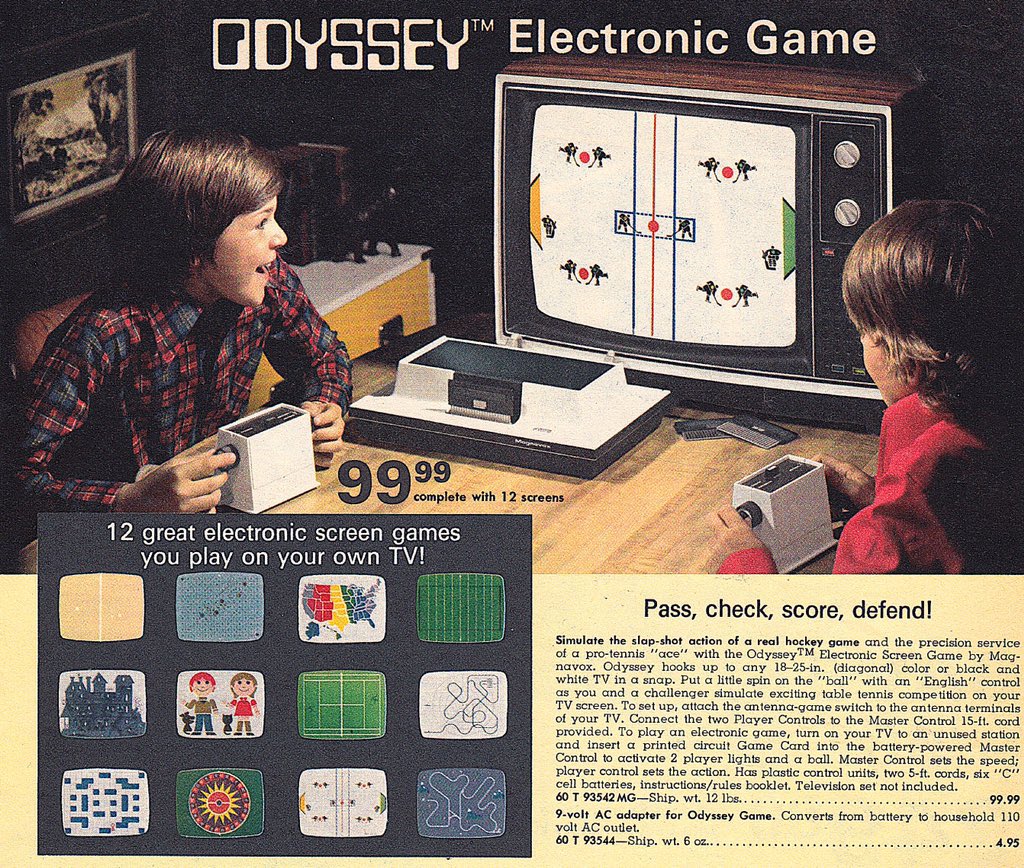
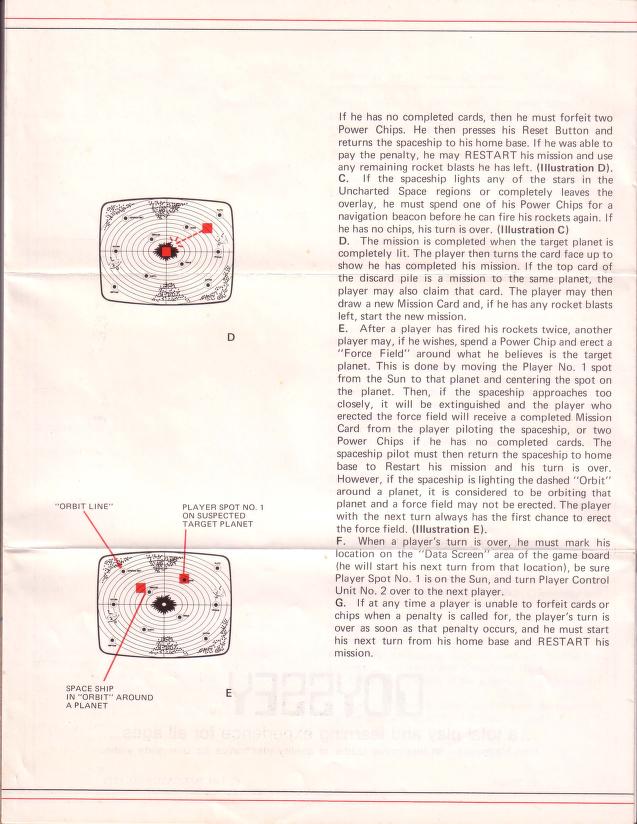
The first game manuals arrived alongside the first commercial home console, the exceedingly primitive Magnavox Odyssey in 1972. As a machine capable of displaying only a few moving dots at once, games didn't have much more depth than ping-pong, and so the manuals existed as "user guides" first and formost. Atari would improve on these with those provided alongside the 2600's games, but it would take the advent of the NES and Megadrive to see the humble instruction manual hit its stride.
_0023.jpg)
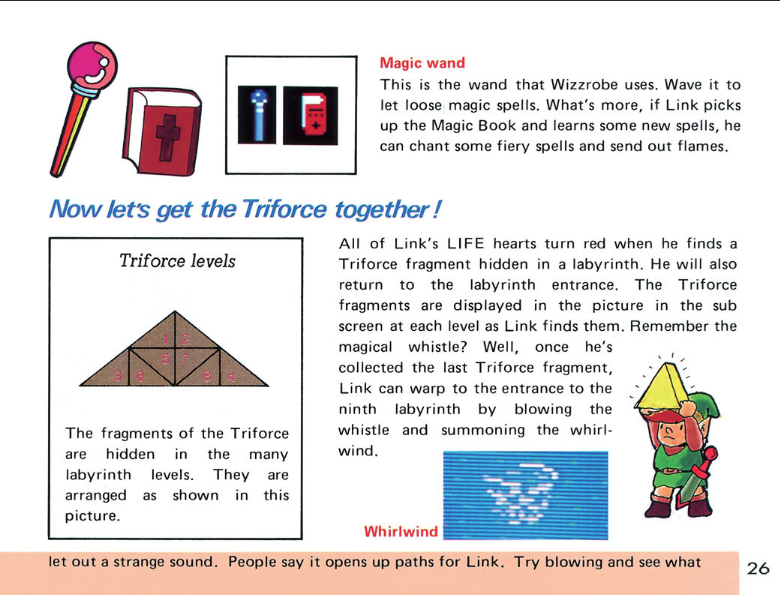
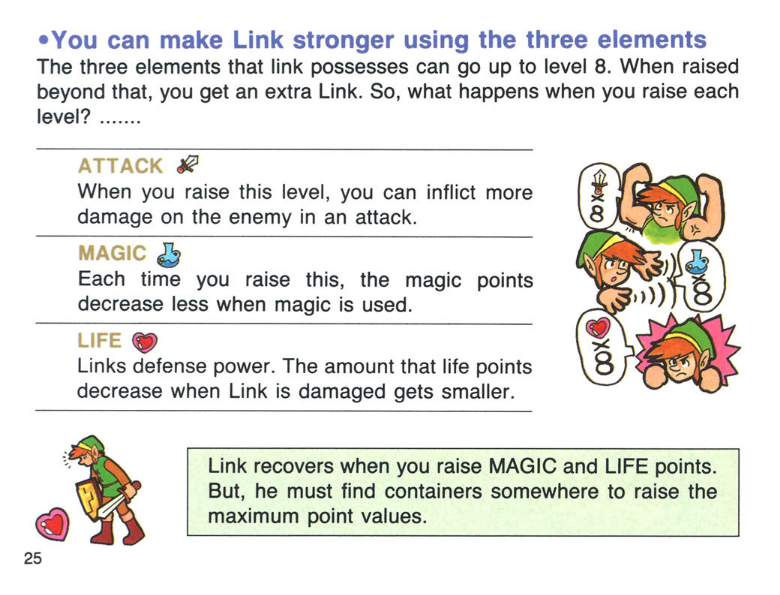
With the golden age of the industry in the 80's, the manual became an integral part of the larger experience. As games had bigger worlds and bigger stories, they needed more detailed explanations of those elements. And as games became more mechanically complex, manuals had to make sure the user understood the way world worked. You won't get very far in The Legend Of Zelda if you do not understand how bombs interact with the enviroment, or that the objective is to clear dungeons in order to progress. Metroid is a game that hardly has any story told through the game. One paragraph of text, to be exact. But the manual tells of an advanced space-faring civilization ruled by a galactic federation, waging war with pirates who seek to revive a an ancient terror on an isolated alien planet, which is where you (the player) intervene.
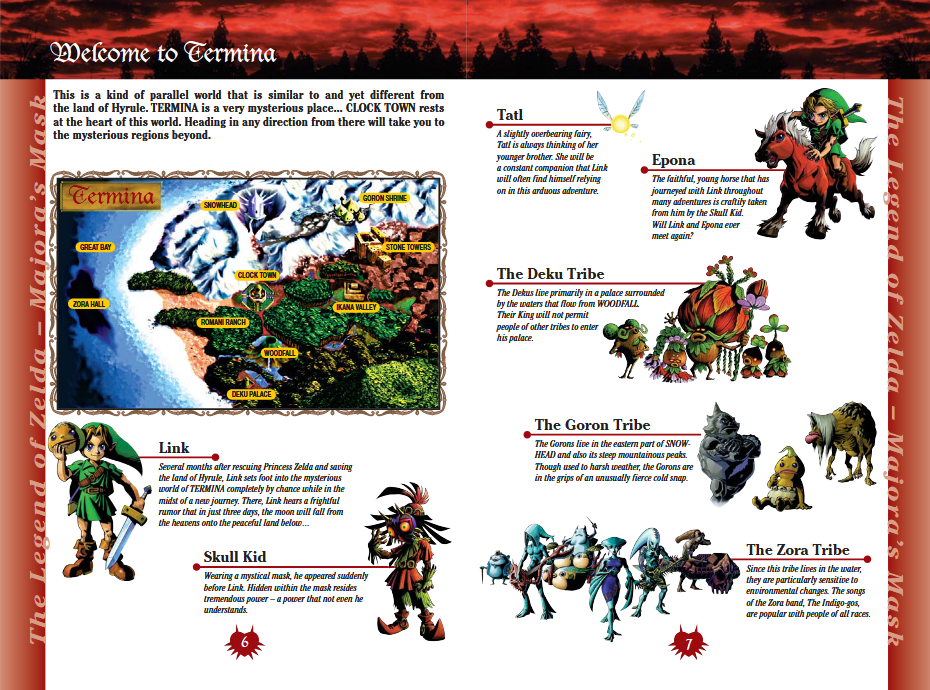
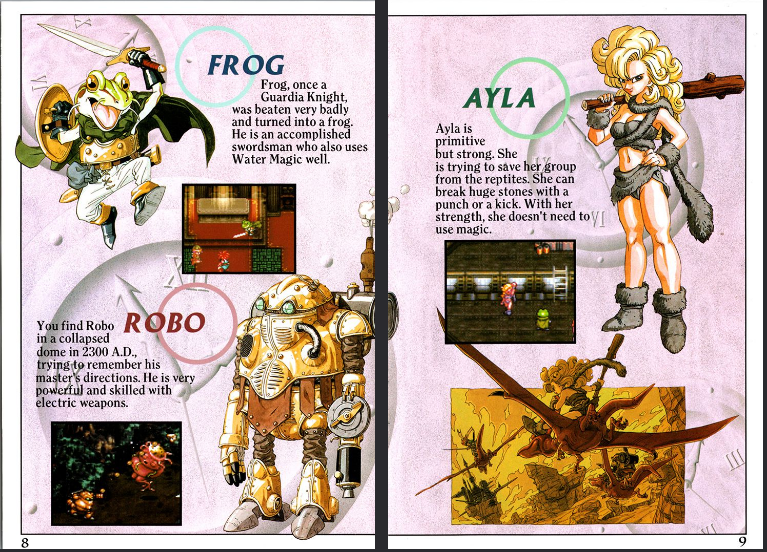
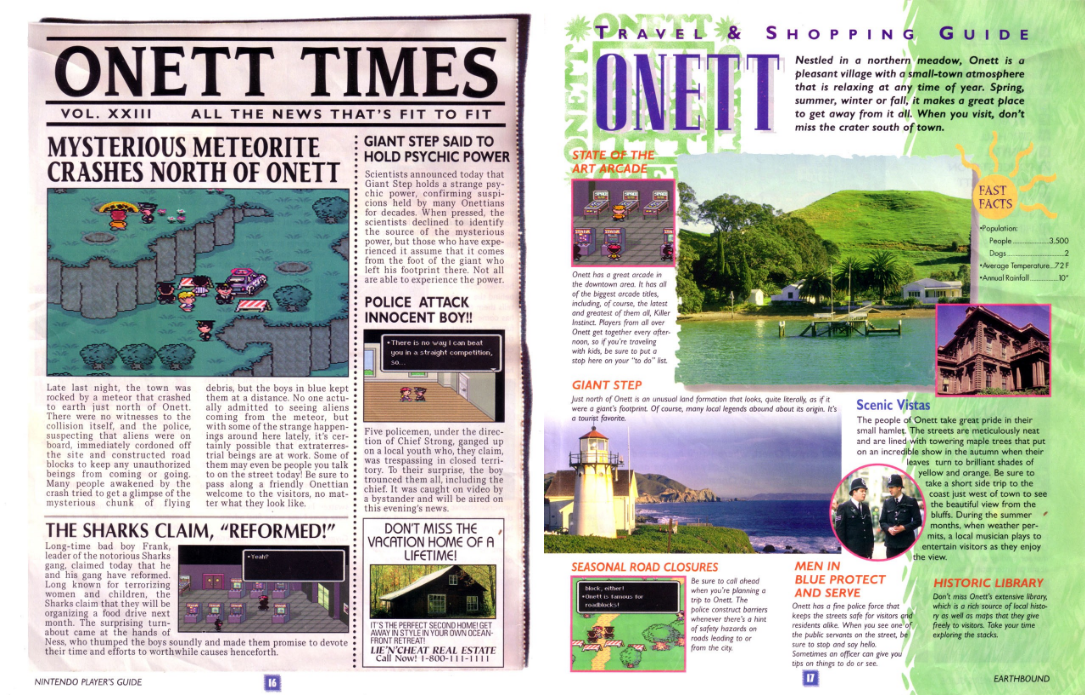
They also served an artistic purpose; in an age where the limitations of software would inevitibly corrupt the vision of the developers, manuals become a place to demonstrate what the low-res sprites and blocky polygons were supposed to look like. Games like Chrono Trigger and Final Fantasy VI came alive with the help of prominent artists Yoshitaka Amano and Akira Toriyama. The Mother trilogy of games used a variety of paper mache models to help set the saturday-morning cartoon, Peanuts-esque atmosphere, and Majora's Mask and Ocarina Of Time wouldn't be the same without the work of Yusuke Nakano, who was responsible for the "haunted Disney" look of the game's art.
_0006.jpg)
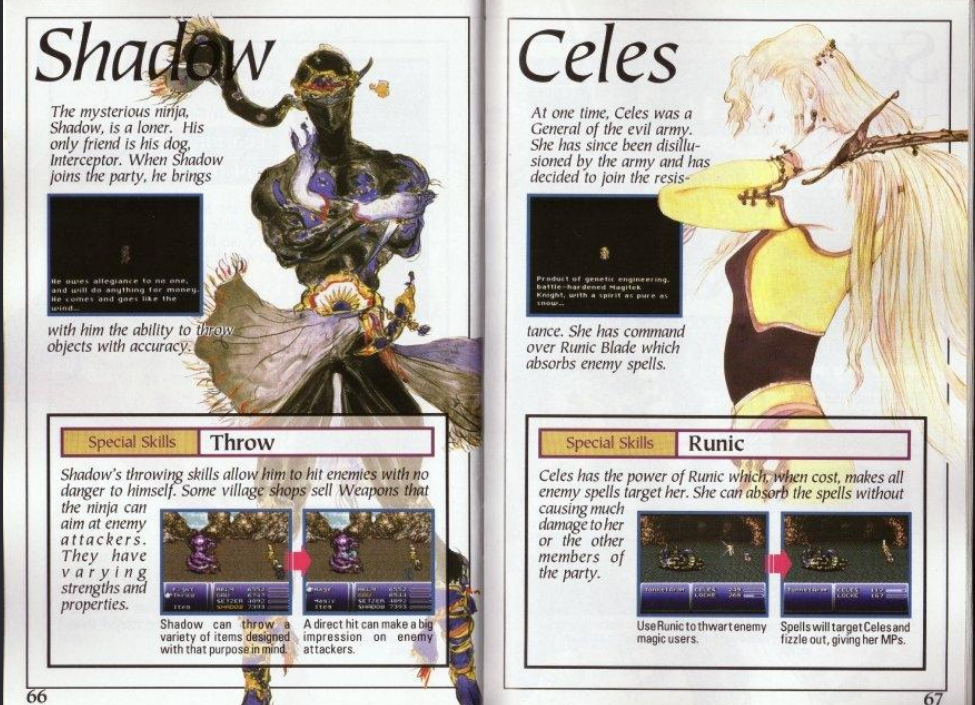
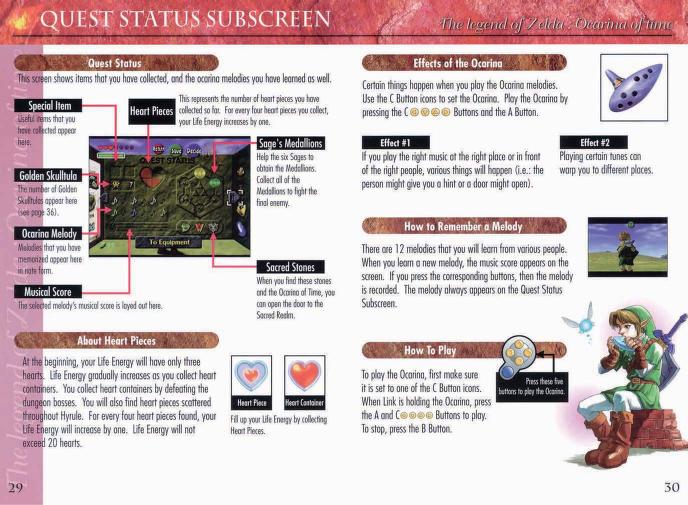
Manuals died sometime in the 2000s. It certainly didn't happen overnight, but as the internet became more accesible and games themselves had fewer limitations, manuals became obsolete. Games could put their story and tutorials in the game world, rather than outside, and the internet could handle everything else. Sometimes physical copies of games may include a map or a poster, but that seems to be the extent of the matter.
Still, some of that legacy lives on. Tunic is a fantastic indie game that includes a digital "manual" that you collect within the game itself, mostly rendered in a made up script that harkens back to a time when localization was much less proffesional or didn't exist at all. It's not just set dressing either, as it's used as the basis of some great puzzles and an unorthodox means of progression. The artwork is gorgeous and the process of scouring the manual for the way forward or finding secrets within the text is especially rewarding in a fashion that's all too rare these days.
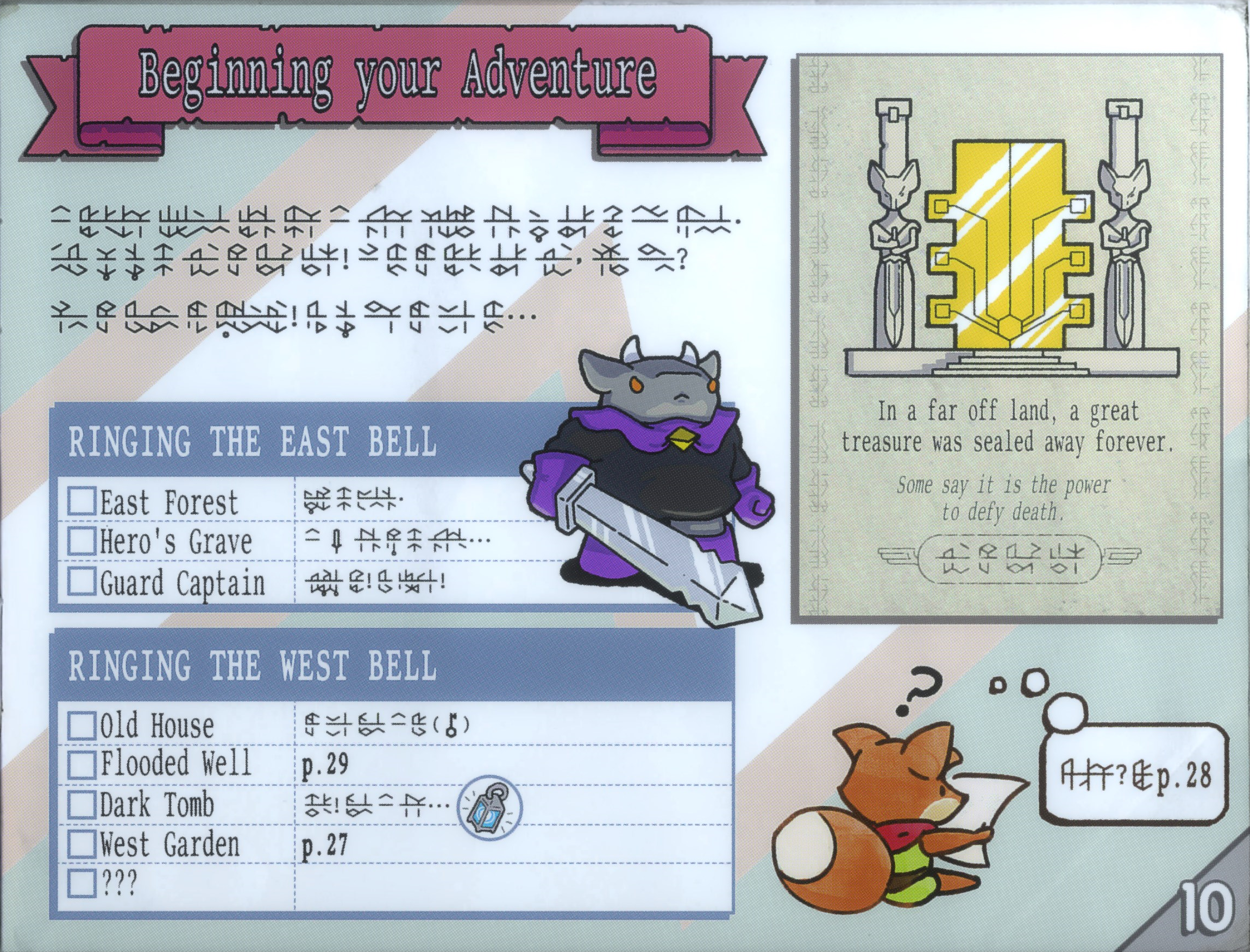
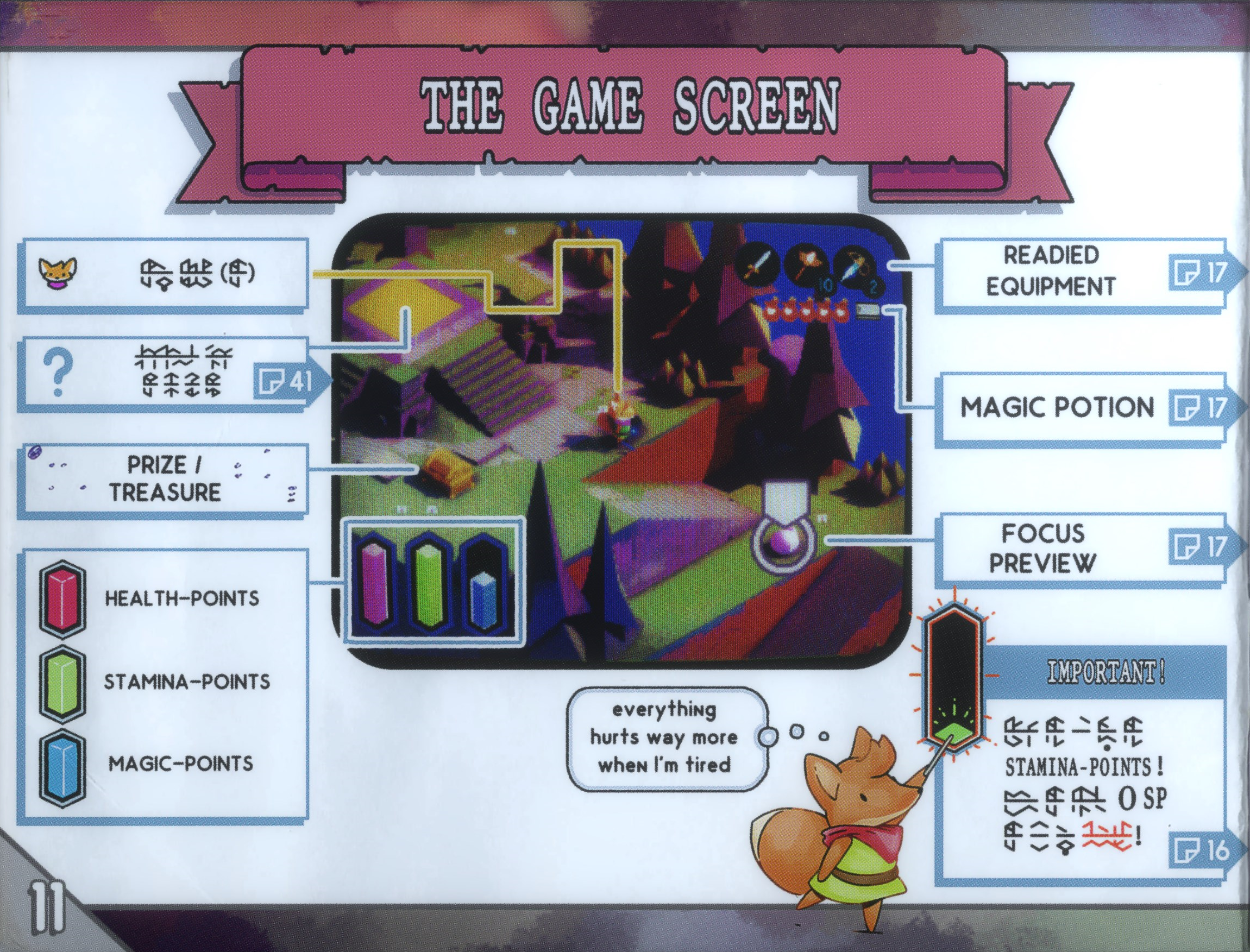
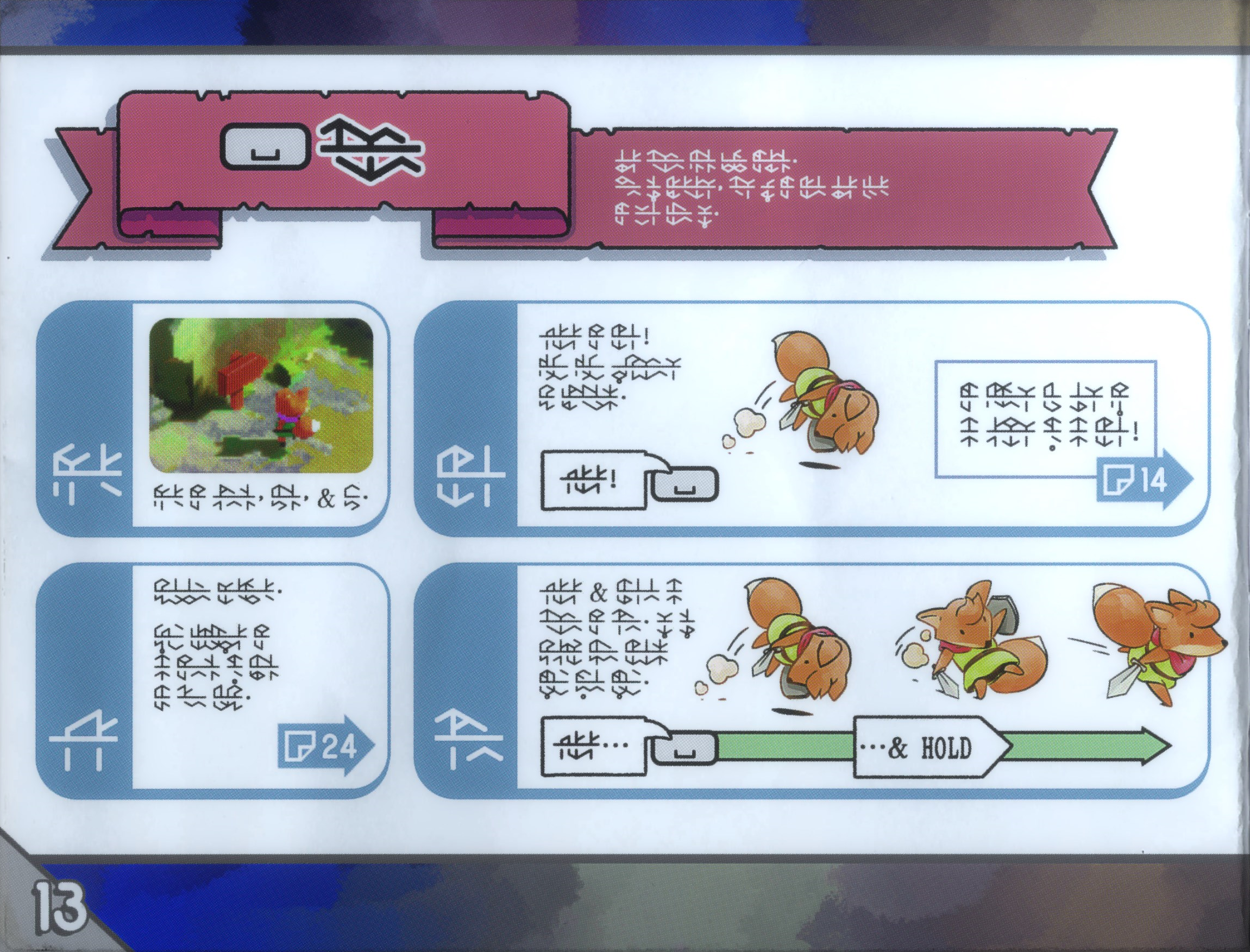
Manuals are probably not going to be making a comeback anytime soon. They've been mostly overlooked or forgotten because they were created to fix a problem that no longer exists. We live in the information age, and as hard as it might be to imagine, there existed a point in time when information was valuable, where data storage was expensive, and people had to resort to paper pamphlets to explain to people what their software was all about. I think it's remarkable that many people really went the extra mile for something that certainly was not required, and tried make something special and unique in the process. Games like Tunic are proof that that effort was not wasted, and that there are still many new ideas left to explore in that space.